





{{current_weather.dt | moment( atts.date )}}
{{current_weather.temp | temp}} °{{units}}
{{day.dt | moment(atts.date)}}
{{day.temp | temp}} °{{day.temp_min | temp}} °{{units}}
Founder/Owner/Operator: Naomi Jansen
Started: I joined Central Highlands Wildlife Carers in 2019, but I’ve been doing this for a lot longer, about 15 years!
Location/s serviced: I service Tieri and Middlemount, but we have Wildlife Carers throughout the Central Highlands
Follow on: Facebook
Tell us a bit about you and how you came to be working with Central Highlands Wildlife Carers (CHWC)?
We moved here as a family in 2019. My husband works in mining. He was doing FIFO from our property in Victoria. We wanted to spend more time together, so we made the decision to move to Tieri.
I grew up with animals around me – everything from joeys and wombats to snakes and birds – so I’ve always had an interest in them and wanted to protect and care for them. This was really emphasised during and after the bushfires in VIC, where our property is a wildlife sanctuary.
So, when we moved to Tieri, I joined the Central Highlands Wildlife Carers group, and haven’t looked back.
What does the CHWC group do?
We are a volunteer wildlife care and rehabilitation group operating throughout the Central Highlands, covering Emerald, Clermont, Moranbah, Dysart, Capella, Tieri, Gemfields and everywhere in between.
We network with other similar groups across the country, work with local vets and get a lot of experts even from places like Australia Zoo.
As a Not-For-Profit, we’re entirely self-funded and rely heavily on grants and donations for the food and vet bills, which can be pretty high considering we care for an average of 500 animals each year.
What’s a typical day like for you?
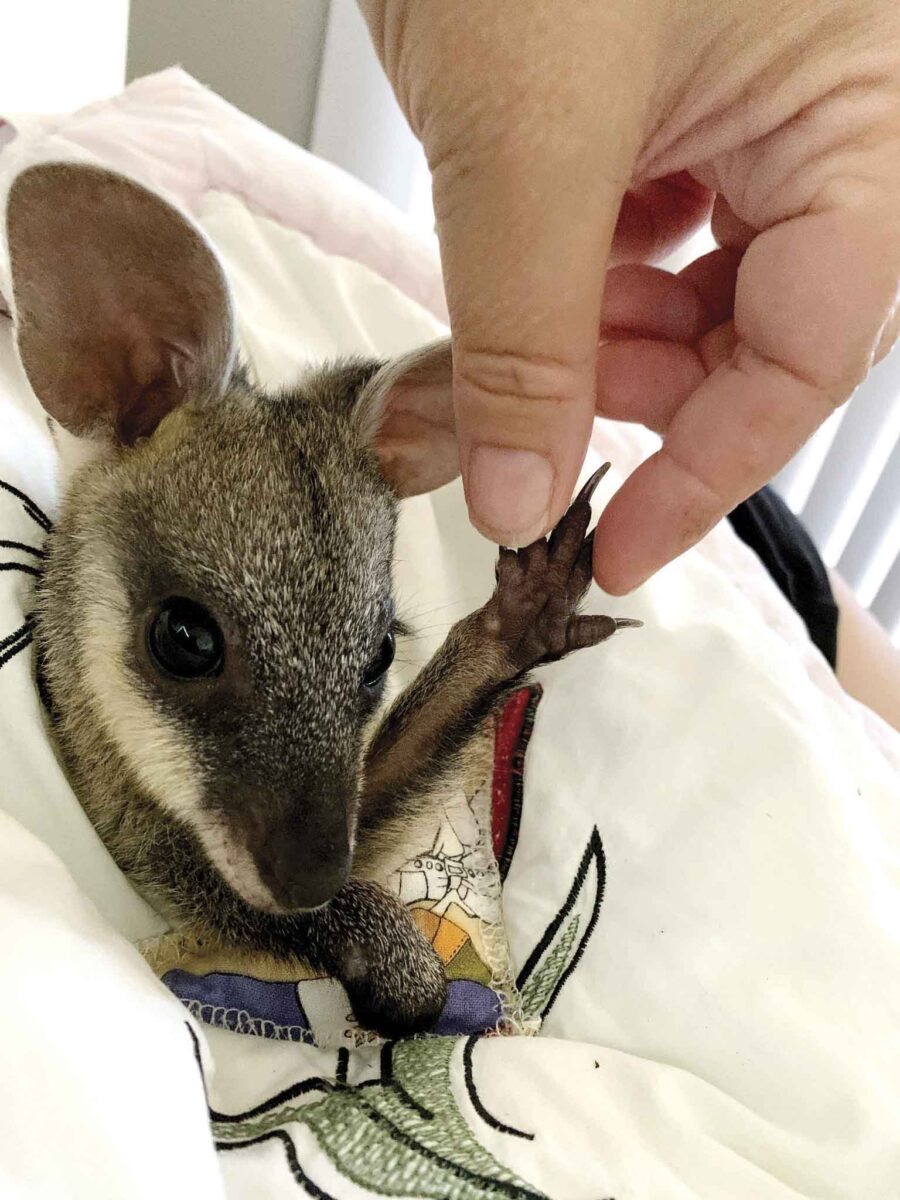
Well, we’ve literally just had a baby black-striped wallaby come in. It’s Mum was hit earlier in the morning. Luckily a couple stopped, gently pulled the baby out and popped it into a little pouch and drove it here. Thankfully the baby is old enough to not have been attached to the teat.
What’s the most important thing for people to be mindful of when they see an animal in distress?
Their safety, and the safety of others. The first thing I always ask is “are you safe?” because of the amount of traffic we have 24/7, especially with large trucks. Stopping for an animal sometimes isn’t an option, but when people do stop, and I know they are safe, I ask if they can pull the animal off the road to help prevent any accidents.
What happens then?
They will either drop it off at my house in Tieri (depending on size) or I’ll meet them at the location they found the animal.
I’ll bring the injured or distressed animal back to the house and that’s when the care begins. I’ll weigh them, check for injuries, determine whether there are any broken bones and what the immediate need is, administer medical attention, warm them up, and then feed them as quickly as possible so that they’re hydrating. Dehydration can actually be the biggest cause of loss so it’s important we get fluids into them as soon as possible and keep that up. The feeding regime can be 4-hourly, throughout day and night so it’s pretty intensive, especially when we have multiple animals in our care. Surprisingly though, it gets easier the more you have as you get into a bit of a routine.
I am a Reiki and Crystal Healer so it comes in handy and I give them a few sessions which really helps calm them. Just like humans, every little bit helps when they’ve been through a traumatic event.
Once the initial care and feed is complete, I make sure I document where the animal was found so that if/when we release them, we do so in the same area. This is particularly important for owls and echidnas.
Release only happens once they’re stable, often months down the track. We often take a soft release approach which means we take them to a carer who has a property where wallabies and kangaroos can mob up. This is our ultimate goal: rescue, rehabilitate and release.
What’s the best part about your job?
We’re so lucky to have such a variety of wildlife here in Tieri from kangaroos to sugar gliders – we’ve just released two! That’s definitely the best part of this role, when we’re able to release an animal, that’s why we do what we do and I love it.
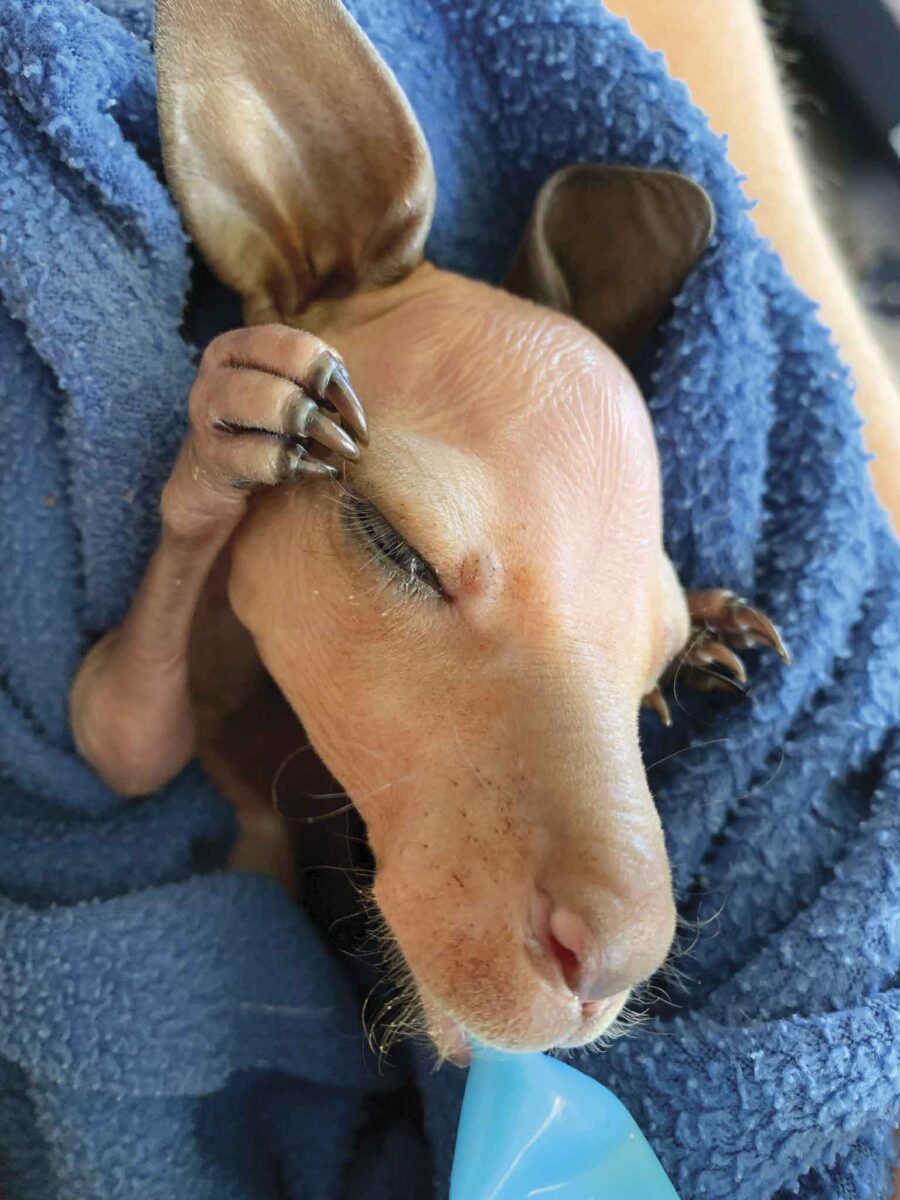
But even having the privilege of caring for these tiny little creatures who are completely reliant on us is just beautiful. We’ve had our hearts broken a million times, but knowing we’ve helped them get through the trauma is fulfilling.
And also the sense of community when it comes to protecting our wildlife. Everyone plays a part in trying to save a little one’s life and Tieri is SO good for that. My personal motto is ‘every little life matters’. We have so many beautiful people here in Tieri who feel the same and will stop to help a little life. To those people I say: you’re the real heroes, thank you!
What’s the most challenging part about your role?
The loss of habitat. It takes 100 years for a proper hollow of a tree to form, but that can be dropped in an instant if we cut down that tree or it gets damaged in a bushfire. That means the loss of a home for so many animals – we need to be more conscious of how we can help. For example, we’re hoping to get a project off the ground in the coming months that will provide little nesting boxes for native wildlife, such as parrots, possums and sugar gliders.
We’re also hoping to get involved with Tieri State School to develop an education program designed to increase children’s awareness of Australian wildlife and how they can care for and protect our wildlife. For example, teaching them that possums aren’t pests. If they’re in your house, create a possum nesting box nearby to redirect the animal.
Do you have a favourite animal?
Emus. We have a resident emu here in Tieri, out past the laundry building turn-off. He’s been around for a very long time. Every year he comes across and shows off his babies, typically up to 10 young per year!
Around a year ago a chap from the Glencore Oaky Creek mine called us about a little emu chick that he found who was all by himself. We called him Dave. He was tiny, just 40 grams. But the growth he had in a matter of days was phenomenal.
He lived with us in the backyard for about four months with a chicken called Delilah. Dave went everywhere Delilah went. He was such a character, very inquisitive like all emus. They’ll rush towards you to see what you’re doing.
When the time came for a soft release, we drove him to his new home – he had his head out the window the whole way, it was hysterical!
Are there any animals you’re scared of?
Spiders! I’m also not so great with snakes but thankfully Tieri has got some fantastic snake handlers.
What’s been your most difficult rescue?
Trying to get a wedge-tailed eagle into the car on my own. They’re truly huge – they can often weigh between 3-4 kg and have a wingspan of over 2 metres! Luckily I had a big blanket in the boot so I was able to cover it with that, but it took a lot of time, effort and patience to do it.
What’s your busiest time of year?
At this time of year, with the amount of ripe sorghum fields in the area, we get a lot of calls about barn owls. In the last two weeks alone we’ve had 17 owls that have sadly passed due to collisions with vehicles. It’s almost impossible for a predatory bird with a broken wing to survive.
Generally speaking, spring is definitely the busiest season, and also when we have dry summers.
With Spring, comes magpie season. Everyone will be familiar with the magpie in the Lions park. The best thing to do is just leave them alone. It’s only 3-4 weeks so try to avoid the park at that time whilst they protect their chicks. Signs will be put up so you’ll know when it’s in season.
What’s the best way for people to contact you if they see an injured animal?
Ring our hotline number ASAP: 0475 288 301.
As a backup, you can contact me on our Facebook page or even send a message on the Tieri Noticeboard Facebook page. Whichever method you use, I can give you advice straight away.
What are your top tips on how people can help care for our wildlife?
How else can the community help?
As a Not-For-Profit, donations are always greatly appreciated. You can use our Containers for Change number: C10015897.

Tieri considers the health and wellbeing of the community a priority. Due to the ongoing Coronavirus (COVID-19) pandemic we have created the Tieri Covid-19 Hub. Please subscribe if you would like to receive a notification when important information is updated on this site.