





{{current_weather.dt | moment( atts.date )}}
{{current_weather.temp | temp}} °{{units}}
{{day.dt | moment(atts.date)}}
{{day.temp | temp}} °{{day.temp_min | temp}} °{{units}}
Kelly, how long have you lived in Tieri and where was home before that?
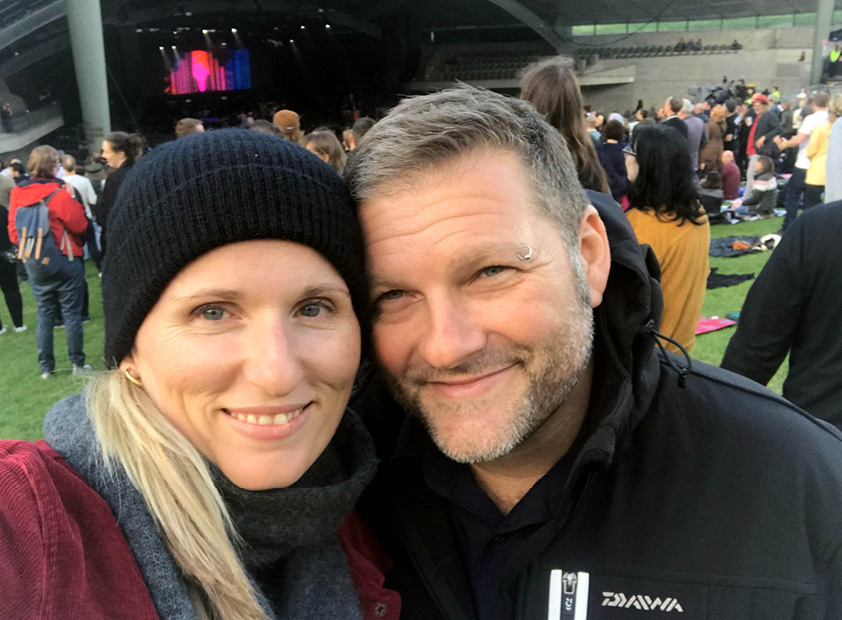
I’ve lived in Tieri for nearly three years. Before that, I lived in Mackay. My husband, Michael, had been doing Drive In Drive Out from Oaky Creek North for years and we decided it was time for the family to relocate. So, my daughters and I moved out here.
I’ve also lived in Brisbane and spent six years living in San Francisco – a very different experience to Tieri!
How would you describe Tieri to people who might be considering moving here?
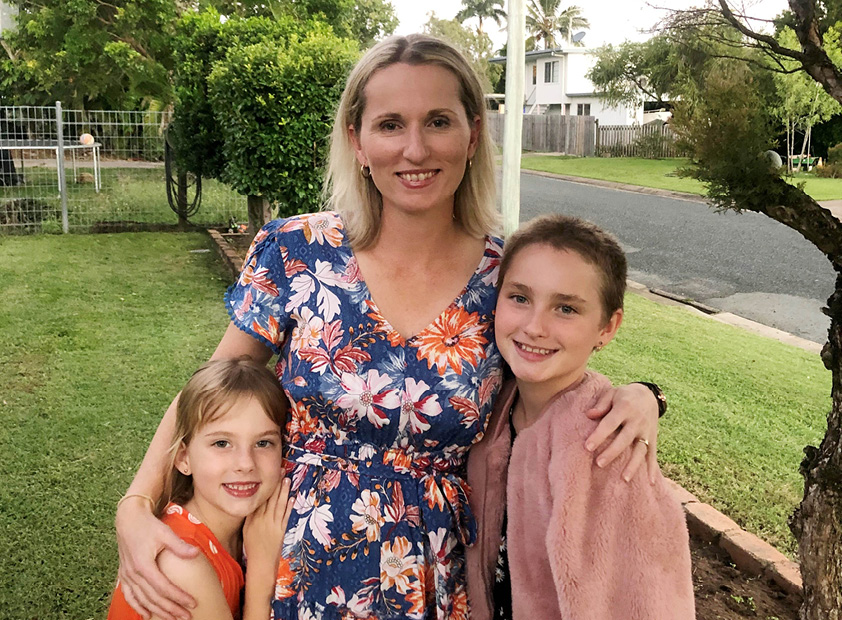
It’s very quiet and relaxed. Everyone knows each other and is very friendly, and there’s no obligation to be anywhere or do anything. After living in fast-paced city environments, I was worried how I’d respond to the change, but the whole family has really embraced it. Our girls, aged nine and 14, love the freedom they get here because it’s so safe and everyone looks out for each other.
You currently work at Navicare – tell us about the organisation and your role there.
I’m the Service Manager and Mental Health Care Navigator for Navicare. It’s a not-for-profit that provides a free service connecting people with mental health support across the Isaac region. Navicare was developed as part of a research project between Wesley Research Institute and Australian Centre for Health Services Innovation.
In 2020, Wesley Research Institute conducted a study across the Bowen Basin to understand the challenges the community faced when seeking support for mental health. The study revealed that many mental health services are not available locally, are not the right fit, and/or have long waiting times before they can be accessed. Additionally, many people felt embarrassed about the need to seek help.
So, Wesley Research Institute consulted with local mental health service providers, Isaac Regional Council representatives and other community representatives to co-design a new model of care that enables people from regional, rural, and remote communities to seek much-needed support that is timely, appropriate and removes many of the barriers associated with accessing specialist health care in the region.
The Navicare model was developed with, and approved by, the community and I was brought in to implement it. We’ve been up and running for three years now. The first year was essentially a pilot that we used to test and research the efficacy of the model. My colleagues and I published the findings in a peer-reviewed journal.
Based on the findings and the success of Navicare, we were recently awarded a grant to expand the service into three other areas, one of which has already opened in Clermont. In the process of opening the new sites, we’ll be conducting long-term analysis of the economic impact the early intervention Navicare provides is having on the health system as a whole.
The role of a Mental Health Care Navigator is to connect people with the most appropriate mental health support. I often say we’re a bit like Tinder but for people seeking mental health professionals. We work with each individual to match relevant services to their individual needs. Mental health issues can stem from organic disease or biological conditions, or from things that are happening in our lives that cause us stress. For example, the loss of someone, financial pressures, eating disorders, learning difficulties, and so on. At Navicare, we aim to connect people with professionals and services that can help them address the root cause. We want to make sure the services they access are the best possible fit as that’s more likely to provide lasting results.
On a daily basis we’re exposed to some distressing situations, but it can be incredibly rewarding knowing that we’ve made a difference to someone’s life and even saved lives.
You’ve got three tertiary qualifications in science and health, plus a Cert III and three Cert IV’s; you’re about to finish another degree – Graduate Certificate in Mental Health – and, in the new year, you’ll be commencing a PhD in Chronic Wounds! What do you enjoy about the learning process?
I love acquiring new knowledge. I’m an inherent problem solver and have been since I was a kid when I was always into puzzles. One way or another, my career has always been about solving health problems, either at the individual or societal level. To solve those problems, you first have to acquire the knowledge.
That thirst for knowledge led you down the path of a Medical Researcher and you have successfully published research on a variety of diseases, and health services and implementation science research. How is the subject/topic of your research decided upon?
The PhD project I’m about to embark on combines biomedical research aspects along with elements around understanding health service protocols and implementation science. I have experience across all three areas, and was approached by Wesley Research Institute to consider the opportunity as they felt I’d be a good fit given my background and experience. I’m really excited to be getting back to research, especially the biomedical component (I’m such a nerd!). I’ll still be running the Navicare service while I’m studying though.
You also spent 11 years teaching at Central Queensland University. What does it take to be a successful educator?
There are LOTS of really smart people in the world, with the ability to acquire, retain and recall an incredible amount of knowledge. Being able to effectively impart that knowledge and educate others however, requires an entirely different skill set. You not only need the content knowledge in the first place, you need to be able to break it down and explain it to multiple different people, who are all at multiple different levels of understanding, and who learn in multiple different ways.
I really enjoyed the process of explaining complex information in a simple, accessible way to help inform the next generation of nurses, clinicians, paramedics, and allied health professionals.
And if that wasn’t enough, you’re a nutritionist and personal trainer! Tell us about that side of your life.
Well, I don’t have much time for that these days, so there’s not much to tell. Before I moved to Tieri most of my work was in the disability sector, working with patients and clients to help them improve their physical strength. Nutrition is the natural complement to that. It was a real buzz seeing a child struggling with their core strength learn how to hold themselves high and ride the zip wire/flying fox for the first time!
What have all these experiences taught you about yourself?
I’m a lot more adaptable than I thought I was. I’ve had to make a lot of pivots in my life. For example, when I moved back to Australia from San Francisco in 2008 and there weren’t any opportunities for a Medical Researcher in Mackay. I wondered what on earth I was going to do. I had all this knowledge and experience and no outlet for it. And that’s when I got into education.
I really don’t like change (as my husband will tell you!) but after so much practice, I’m definitely getting better at the pivots and am ready to embrace the next one, if/when it is required.
You’re clearly a very driven individual; what motivates you?
Helping people. I want to make a difference in people’s lives, whether that’s helping an individual improve their health or come back from the edge of suicide, or helping thousands of people through my research. I simply want to improve people’s lives and wellbeing.
What do you like to do outside of work?
I always wanted to be a journalist and I do some creative writing on the side. I’ve written a few kids’ manuscripts and a complete adult novel, and I have another three adult fiction books in various stages of completion. I’ve not had much chance to pursue my writing since starting my Graduate Certificate, so I’m hoping to pick it up again in the new year.
How do you manage your time?
I don’t! At least, I don’t do it as well as I would like. I can either be very focused on something, or a giant procrastinator when it comes to things I don’t particularly want to do.
Where’s your ‘happy place’?
Hanging out with the hubby and the kids, or going for a run (so long as the magpies aren’t swooping!).
If you could live in any era, when would that be and why?
The 1980s or 90s, before social media and handheld devices took over our lives. Technology plays a key role in keeping us connected, but sometimes we’re a bit too plugged in. It would be fun to go back to the 80s for our girls to see how Mum and Dad grew up……perhaps without the terrible hairstyles though!

Tieri considers the health and wellbeing of the community a priority. Due to the ongoing Coronavirus (COVID-19) pandemic we have created the Tieri Covid-19 Hub. Please subscribe if you would like to receive a notification when important information is updated on this site.